
press release – December 4, 2025.
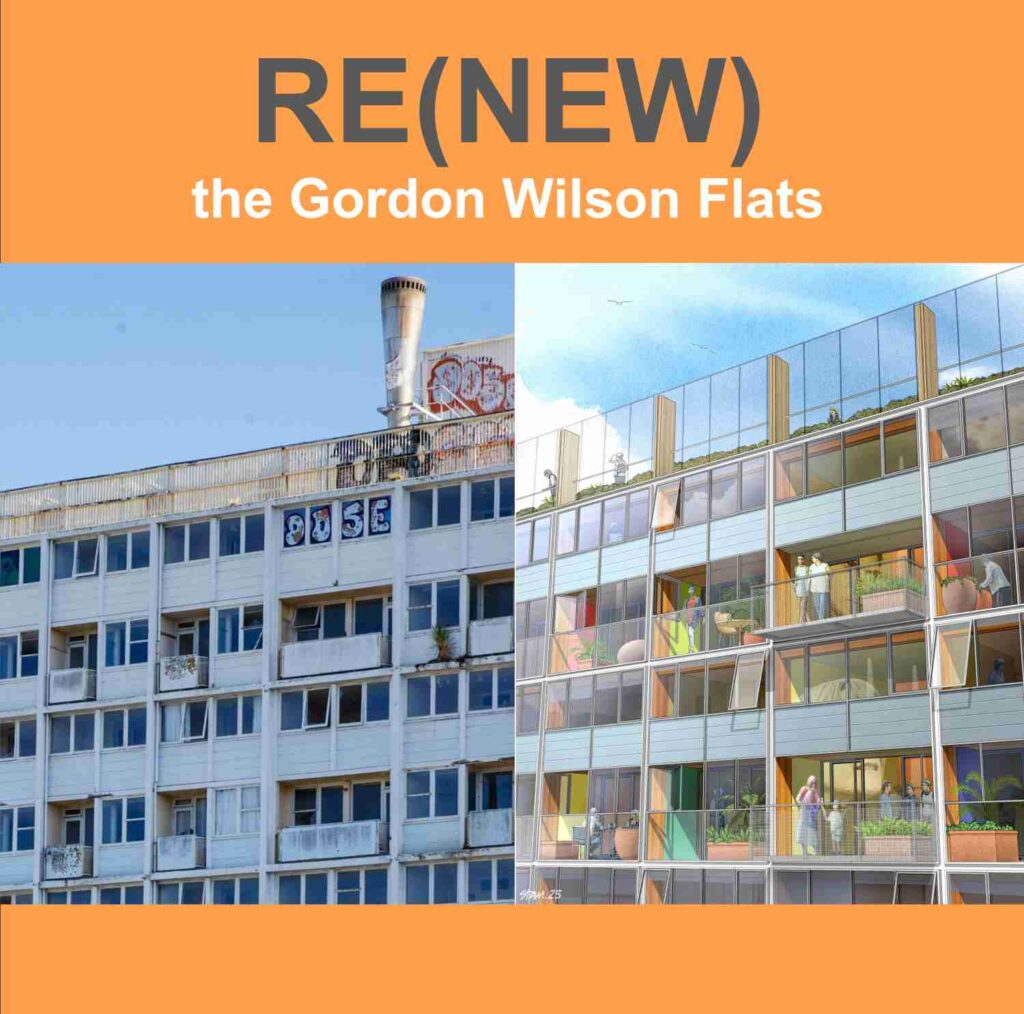
Victoria University of Wellington is out of step with global practice in demolishing the Gordon Wilson Flats and McLean Flats on the Terrace
- Demolition instead of renewal out of step with global trends
- Renewal would use 90% less carbon that demolition and rebuild
- VUW has not released project plans, costs or timeline
The Architectural Centre notes with great sadness the planned demise of the Gordon Wilson Flats, one of Aotearoa New Zealand’s most important post-war buildings, along with the adjacent McLean Flats. After a long period of decline and neglect, the building has succumbed to a Victoria University – Te Herenga Waka (VUW) decision this week to commence their demolition before Christmas, a process expected to last more than six months.
The building was described by New Zealand’s leading authority on urban history, Ben Schrader, as an emblem of modernity, the demolition of which “would be a tragedy, ripping a black hole in our architectural history”.
The Architectural Centre’s Rob Tse says that by demolishing this building, “we would lose a physical memory for future generations: a daily reminder that increasing urban density is not a new invention by the current government nor recent city councils, but has a proud history dating back more than seventy years.”
In the 1950s, an extraordinary period of optimism and determination to transform society for the better, the government set about building vibrant inner-city communities as an antidote to urban sprawl.
The Gordon Wilson Flats was built as a flagship for these ideals. For many years they provided a model of high-quality affordable housing, innovative for its time, with roomy split-level maisonette apartments, spectacular harbour views, and space for sociability and community living.
“Demolition deprives our city of that physical landmark. But more urgently, we also lose a chance to deliver a hundred warm, dry housing units quickly and save carbon, waste-to-landfill and negative impact on the city. Demolishing a building that has served less than half its lifespan is a black mark on our collective goals to address climate change and move to a low carbon future. It doesn’t need to be this way,” says Rob Tse.
As a progressive group, the Architectural Centre has no interest in living in the past and from the outset has been focused on finding a practical solution based on the facts of the building’s current condition.
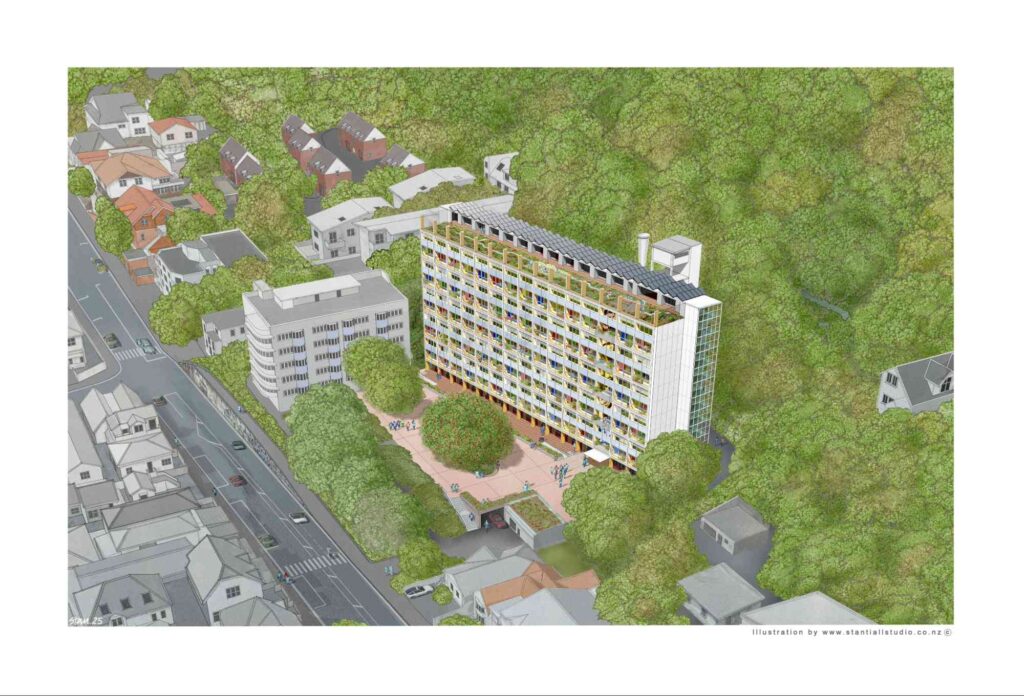
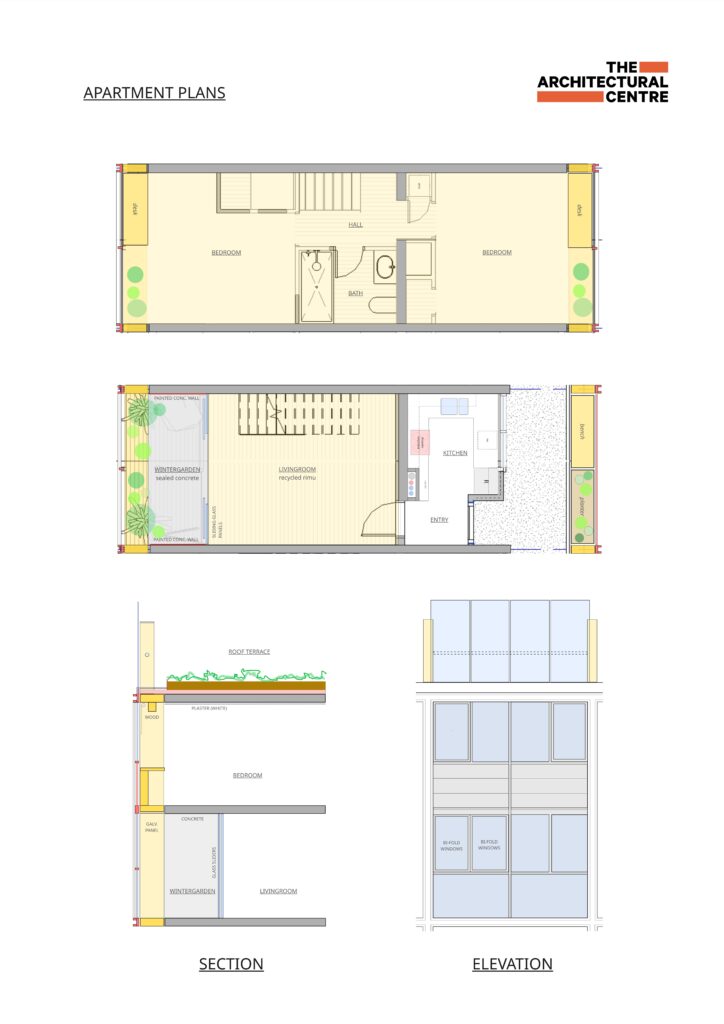
The Centre has put forward to VUW alternative designs and plans for the site to show how the building could be reused, renewed and restored and avoid demolition. The Gordon Wilson Flats are not structurally earthquake prone – it is largely the dilapidated façade of the building that is dangerous and needs replacing.
Our plan would do this, while retaining 80 percent of the building’s existing structure, saving it from the landfill. It would use over 90 percent less carbon than demolition and rebuild, and would include remediation of the building to perform with greater energy efficiency, both a win for the environment.
“We have demonstrated it is viable to renew the building to achieve VUW’s goals. It can be both flexible for different uses and attractive to modern tastes and trends in the student and non-student markets here and internationally. Renewal would also honour the social ideals of the original building design. And cost up to 35-percent less than an equivalent new build.” says Rob Tse.
In deciding to demolish, VUW is significantly out of step with global trends which favour retaining and adapting existing buildings for reuse, rather than new builds. It is increasingly being recognised across the world that “the greenest building is the one that already exists.” (Carl Elefante)
Contrary to expert advice we have received, the university has stated it is not financially viable to restore the building and that demolition and rebuild is the best option. While the university seems to be in a rush to demolish, starting before Christmas, we have yet to hear about any specific rebuild plans they may have, or the costs comparing renewal with demolition and rebuild. We are waiting to see how it is that the environmental impact of their plan better aligns with their stated goal to be net carbon zero within four years – by 2030 – than reuse and renewal.
What also remains to be seen is whether we are about to see the university following the poor example of the last Wellington City Council in the unfortunate Te Ngakau affair. In that case civic buildings were demolished in haste only to discover this was likely unnecessary and that no rebuild is now commercially viable for the foreseeable future. Add this to the brown gaping space where social housing in the Arlington Flats once stood, and the loss of the Karori School of Education buildings, state-built assets also once owned by VUW and this is looking like an unfortunate trend.
The Architectural Centre believes the best opportunity to deliver housing on this site is to retain the buildings and intensify the site even more. It would be faster, greener and more affordable. It is nonsensical to tear down adaptable high density, high-rise housing on a vague promise of building sometime in the future.
Leave a Reply